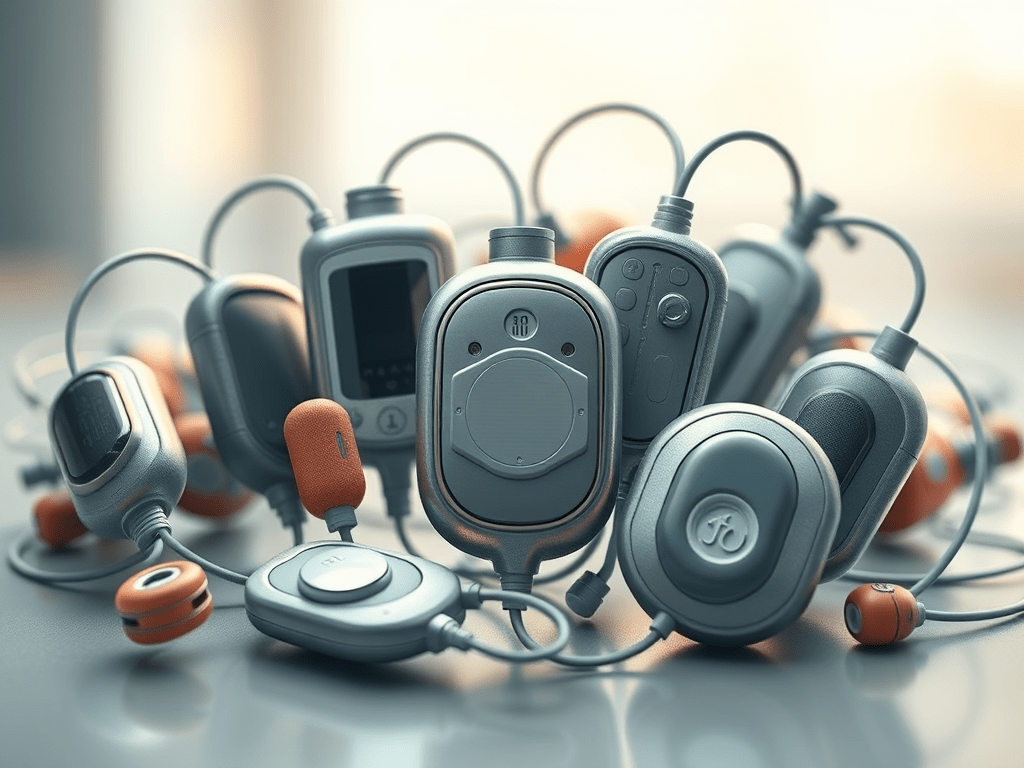
— A Thought From Someone Who Lives With One
Here’s a question that’s been on my mind recently:
We can donate organs after we die. Why don’t we donate devices?
I’m talking about pacemakers, defibrillators (ICDs), and vagus nerve stimulators (VNS). These are all sorts of electronic implantables literally designed to keep people alive. They don’t stop working just because we do.
I have a VNS myself — it’s a small device in my chest that’s often compared to a pacemaker. It’s connected to a nerve in my neck and helps prevent seizures by detecting sudden spikes in heart rate. It doesn’t feel like some throwaway bit of tech. It’s part of me — but it’s also a machine. A machine that, theoretically, could help someone else if I no longer needed it.
So I started asking questions.
What happens to these devices after we die?
Should they be removed? Can they be reused? And if not — why not?
What Are These Devices, Anyway?
Let’s quickly break down the main players:
- Pacemakers: These are small machines implanted in the chest. They help control the heartbeat by either speeding it up or slowing it down as needed.
- ICDs (Implantable Cardioverter Defibrillators): These go one step further and shock the heart back into rhythm during cardiac emergencies.
- VNS (Vagus Nerve Stimulators): Less commonly known, these are used for neurological conditions like epilepsy. They don’t shock the heart — they stimulate a nerve to interrupt seizure activity before it gets serious.
All three are small, smart, life-extending tools — and all three usually get buried or burned with their user.
The Economics Just Don’t Add Up
Here’s a stat that stopped me:
Back in 2011, NHS England was spending about £500 million on ICD implants. That’s just one type of device.
Today, with inflation, a single one can cost around £14,000.
The NHS is amazing — but it’s stretched thin. In 2022–23, it spent £181.7 billion, and still went over budget by £4–5 billion due to COVID-19’s ongoing impact.
Now consider this:
As of March 2023, over half a million people had pacemakers in the UK. What if even a fraction of those devices could have been donated and reused instead of replaced with brand-new ones?
The savings could be huge. Not just financially, but in terms of waitlists, access, and equality.
E-Waste and Environmental Fallout
If you’re thinking, “Well, maybe they can’t be reused safely,” here’s something else to consider.
When these devices aren’t reused, they’re often discarded as e-waste. Much of that waste ends up in low- and middle-income countries. It’s handled without proper regulation or safety. Sometimes, it is managed by children.
Improper e-waste disposal isn’t just a logistical issue. It’s a health crisis. Toxic materials from burning or acid-leaching electronics can cause serious health problems, especially for pregnant women and young kids.
So instead of throwing these devices into that harmful cycle, why not build a closed-loop reuse system here at home? It’s better for people, better for the planet, and better for healthcare.
What Happens Right Now?
Currently, the main reason implants like pacemakers are removed after death is for safety during cremation. The heat can cause them to explode.
But what happens after they’re removed? That’s where it gets murky.
Some funeral directors offer donation options. In one 2011 program, 121 pacemakers were donated. They were sent to India. 88% were still functional and ready to save another life.
There’s also the My Heart Your Heart initiative, which focuses on ICD reuse. Information about these kinds of programs isn’t widely available. Donating VNS devices in the UK feels unexplored. It’s like we haven’t even started that conversation.
So Why Aren’t We Doing This?
Maybe it’s a mix of things: medical red tape, lack of public awareness, cultural squeamishness.
But we weren’t always comfortable talking about organ donation, either — until we made it mainstream.
As of March 2023, 43% of people in the UK were registered organ donors. That didn’t happen by accident. It came from public education, compassion, and policy support.
And yet, in that same month, 380,787 people were waiting for life-saving cardiac or palliative treatment. The number was only growing.
What if they didn’t have to wait?
Final Thought
This isn’t about turning grief into a spreadsheet.
It’s about choices. About giving people the option to let something useful live on — just like we do with hearts, kidneys, lungs.
Of course, safety checks would be needed. Of course, there are logistics. But if the will was there — politically and socially — we could build the systems to make it happen. Maybe we’d even create new jobs, clean up e-waste, and relieve financial strain on the NHS along the way.
Sometimes the smallest, quietest devices are the ones ticking away in our chests. They are also the ones with the most life left to give.
 The Red Thread
Leave a comment